Search “best headphones” on Google and you get the same five wireless models every time, ranked by sites that barely touch wired gear. Spend twenty minutes on r/headphones, r/HeadphoneAdvice, or r/BudgetAudiophile and you enter a completely different conversation.
People in those communities buy a dozen pairs, sell half of them on r/AVexchange, and argue for forty replies over earpad materials and output impedance. That obsession filters out marketing hype fast. The same specific models keep surfacing across beginner threads, gaming threads, and decade-long ownership check-ins, and a surprising number of them cost less than a video game.
Key takeaways
- The best values sit at the bottom and middle of the price curve. A $20 clip-on and a mid-priced Sennheiser open-back earn more long-term loyalty than four-figure flagships.
- Wired beats wireless for sound quality. The headphone subs only point to Bluetooth models when noise cancelling for a flight or open office is the primary goal.
- Planar and high-impedance headphones need an amp. Plugging a 300-ohm Sennheiser into a weak motherboard jack makes it sound flat; a $110 pocket DAC/amp solves the problem.
- Quality control matters more than tuning debates. The biggest warnings in these threads aren’t about frequency response. They’re about HiFiMan channel imbalances and budget IEM filter clogs.
How Reddit picks headphones
A single glowing post doesn’t mean much in audio forums where new gear gets hyped every week. What matters is survival over years: which headphones people still keep on their desk five years after buying them, and which ones experienced listeners still tell newcomers to start with.
Once you clear a low price floor, tuning comes down to personal taste, whether you prefer warm midrange or bright treble. Build longevity and quality control aren’t subjective at all, which is why the warnings below carry just as much weight as the praise.
The cheap legends that started it all
Before you spend serious money, the headphone subs usually tell you to hear what twenty dollars can do. That conversation almost always starts with Koss.
The Koss KSC75 is an ugly silver ear-clip headphone that dates back to the early 2000s and still humbles pricier gear. As one listener noted on r/HeadphoneAdvice, “I bought lots of headphones, most recently dt880, k371 and hd560s, but I always come back to the ksc75/porta pro+simple headband+yaxi pads.” Its sibling, the Koss Porta Pro, puts a warmer, bassier version of that sound into a retro folding headband. Both feel like cheap plastic and leak sound into the room, yet their midrange clarity keeps veterans reaching for them.
If you want a traditional over-ear fit around the same budget tier, the Philips SHP9500 is a featherweight open-back with a huge modding crowd, while the Philips Fidelio X2HR brings the sub-bass punch that the Koss clips and SHP9500 leave out.
Your first real open-back headphones
When listeners step up to a permanent desktop headphone, the Sennheiser 600-series dominates the thread replies.
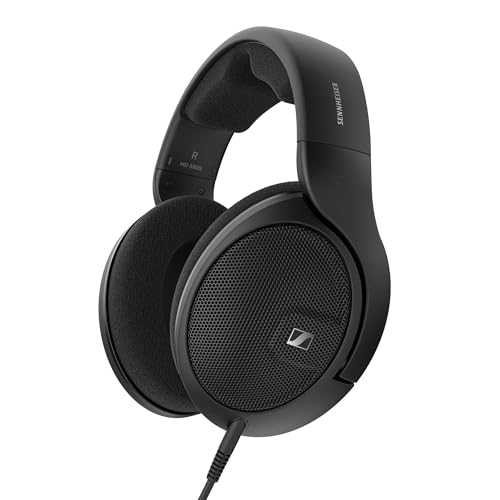
The Sennheiser HD6XX is a Drop-exclusive version of the classic Sennheiser HD 650, sold at a steeper discount by trimming the retail packaging. Drop sells the HD6XX directly, while Amazon carries the identical Sennheiser HD 650 under Sennheiser’s main label. It delivers lush, natural vocals, clamp force that relaxes into all-day comfort, and modular construction where every part snaps apart for easy replacement. One longtime owner on r/headphones wrote, “I will NEVER sell my HD6XX. They are what got me into the hobby, they blew my mind and I still think they are without doubt THE best headphones that I’ve ever heard.” Another listener in the same thread summed up the durability: “My primary daily driver is an hd650 I bought in 2008. Wonderful cans.”
Skeptics sometimes complain about the plastic housing, until veterans point out how well it holds up. As one commenter explained on r/BuyItForLife, with the Sennheiser HD600, you “just replace the cups and it feels like new.” If you prefer a brighter, flatter studio presentation that runs easily without an amplifier, the Sennheiser HD560S is the cheaper sibling that gets recommended alongside them.
The planar that punches way above its price
Past the Sennheiser dynamic drivers, planar magnetic headphones take over the sub-$400 conversation. Instead of a small cone, planars use a thin flat diaphragm suspended between magnets, giving them faster transient response and wider instrument separation.
The HiFiMan Sundara is the planar benchmark under $300, especially since regular price cuts have pushed it down near $180. Advising a buyer hunting for spatial width, one regular on r/HeadphoneAdvice noted, “For a wider soundstage within a budget, I’d look at the Sundara, 560S, or a K712/K702.” The sound is airy, crisp, and fast.
You do have to factor in HiFiMan’s reputation for spotty assembly. As one owner put it on r/headphones, “They were even willing to send me a replacement for my Sundara before even shipping out my broken pair. I’ve had zero issues with hifiman support and I’ve used them several times. Their QC sucks though.” Buy from a retailer with painless returns, test both earcups thoroughly during the first month, and you get planar speed for midrange money. If you want an even larger presentation and have a larger head, the HiFiMan Edition XS sits just above it in price.
Budget IEMs that embarrass the price
If you don’t want full-size earcups on your head, wired in-ear monitors (IEMs) move even faster on Reddit, and the sub-$100 options perform shockingly well.
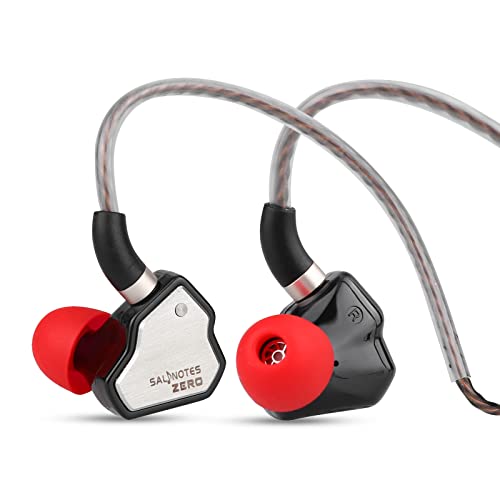
The Moondrop Aria (now updated as the Moondrop Aria 2) became the default entry recommendation for smooth, Harman-style tuning in a weighty metal shell. However, longtime users warn about moisture and filter issues on the original generation. One frustrated owner on r/HeadphoneAdvice cautioned, “The quality control issues of the Arias are severely understated. Replaced the filters and checked the cable but nothing changed.” Keep them dry, store them in a case, or cross-shop the Truthear Hexa and 7Hz Salnotes Zero if you want cheap studio-clean alternatives under $80. If you want planar speed in an earbud, the 7Hz Timeless II is the step-up pick.
Gaming without the gamer tax
Ask a gaming forum for a headset and you get plastic RGB cans with bloated bass that muddies footsteps. Ask the headphone subs and they point you straight to open-back audio gear with a real microphone attached.
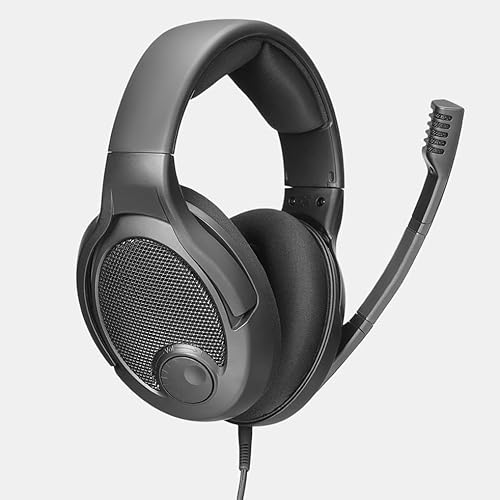
The Drop PC38X (co-developed with Sennheiser/EPOS) is an open-back headset with a flip-to-mute boom mic and angled drivers derived from Sennheiser’s gaming line. As a commenter summarized on r/HeadphoneAdvice, “PC38X are open back, and regarded as top tier for gaming.” Because the earcups are open to the air, gunshot direction and footsteps map cleanly in space, and your ears don’t sweat during four-hour sessions. It leaks audio into the room, so if you play next to a loud TV or want a sealed wireless planar headset, the Audeze Maxwell is the heavy-duty closed-back alternative.
When you just want wireless and quiet
Open-back headphones are useless on a plane, a commuter train, or in a loud apartment. When isolation and Bluetooth convenience come first, the audiophile subs drop the purist act.
The Sony WH-1000XM4 remains the go-to travel pick over its newer sibling because it folds flat into a smaller case and frequently sells on discount. Its tuning is warm and bass-heavy out of the box, though Sony’s companion app gives you a multi-band EQ to tame the low end. Praising its daily practicality, one owner on r/AskReddit wrote, “The world is so much more enjoyable when everything can shut up. I will forever stand by my Sony XM4s. They’re light, sound quality is great, the mic is great, the noise canceling is amazing.” Another owner on r/HeadphoneAdvice pointed out how easy they are to keep running: “I have wh-1000xm4 since 2023. The only thing that deteriorated is the ear cups, so we bought a replacement and it is like new again.”
If you want true audiophile tuning with active noise cancelling and don’t mind spending triple, the Focal Bathys is the luxury wireless pick, while the Soundcore Q20i covers the sub-$50 commuter budget.
You probably need an amp or DAC
Plugging a high-impedance Sennheiser or a low-sensitivity planar straight into a cheap laptop jack is the classic beginner mistake. The volume might get loud enough, but the bass sounds loose and dynamics flatten out.
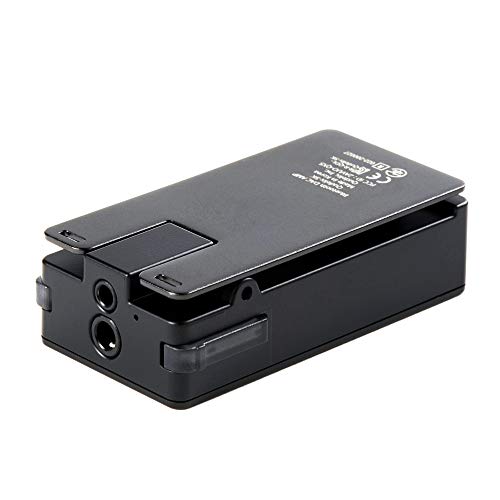
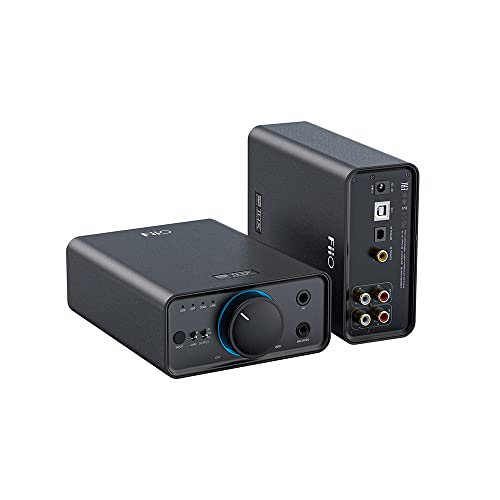
You don’t need a massive desktop stack to fix it. The Qudelix 5K is a thumb-sized DAC and amplifier that runs wired over USB-C or wirelessly over LDAC/aptX Bluetooth, and its mobile app includes a full parametric equalizer with built-in presets for almost every headphone on this page. As one user raved on r/BudgetAudiophile, “The Qudelix 5K is simply shocking for how good it is and what it does for the price. It will take them to the next level.” If you prefer a stationary volume knob on your desk, the FiiO K11, FiiO K7, or a Schiit Magni stack will drive almost anything you plug into them.
The endgame splurges
Once you cross $500, diminishing returns hit hard. A $1,200 headphone does not sound four times better than a $300 Sennheiser; you are paying for the last few percentage points of staging, sub-bass extension, and build materials.
Among listeners who make that jump, the HiFiMan Arya (particularly the Stealth Magnet revision) is the recurring high-end target now that street prices have fallen well below its original $1,600 launch tag. One owner on r/headphones called it “one of the most transparent, holographic, and detailed headphones in its class. It’s sort of a benchmark in that respect.” Alongside the Arya sit the HiFiMan Ananda, the punchier dynamic Focal Clear MG, and the dark, weighty Audeze LCD-X. Audition these before buying if you can, and pair them with a dedicated desktop amp.
When cheaper is genuinely fine
Most people reading headphone threads don’t need a desktop rack or a $600 planar. The jump from free pack-in earbuds to a $20 Koss KSC75 or a $70 IEM is massive; the jump from a Sennheiser HD 650 to a flagship is subtle and only matters when you sit down and focus purely on the music.
If you listen while working, gaming, or commuting, pick the form factor that fits your room noise, add a Qudelix 5K if you go with an open-back, and stop scrolling the upgrade threads.
FAQ
Do I really need an amp? For the Koss KSC75, Drop PC38X, or budget IEMs, no. For the Sennheiser HD 650/HD6XX, HiFiMan Sundara, and HiFiMan Arya, an amp makes a clear difference in headroom and bass control. The Qudelix 5K covers both portable and desktop use.
Wired or wireless? Wired for home listening and gaming, wireless for flights, offices, and noisy apartments. No Bluetooth codec completely closes the gap with a good open-back headphone in a quiet room.
Why do the same older headphones keep coming up? Audio transducers age much slower than phones or laptops. The Sennheiser HD600/650 design and Koss KSC75 have survived for decades because good acoustics don’t go obsolete, and replacement pads and cables are easy to find.
Are these affiliate links? Yes. If you buy through an Amazon link on this page, Upvote Picks may earn a small commission at no extra cost to you. Every pick and warning comes from recurring discussions across r/headphones, r/HeadphoneAdvice, and r/BudgetAudiophile.
Source notes
This guide is compiled from owner discussions across r/headphones, r/HeadphoneAdvice, r/BudgetAudiophile, and r/BuyItForLife. Street prices fluctuate often, particularly on HiFiMan open-backs and Sony noise-cancelling models during seasonal sales.